
history of solitaire games
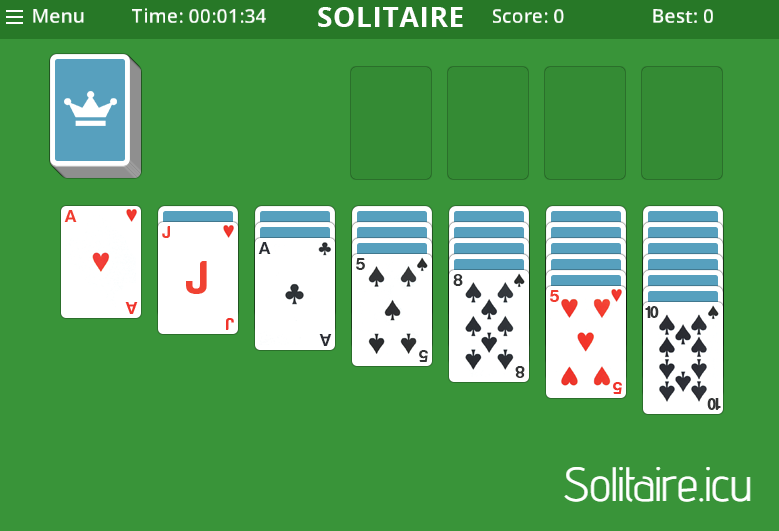
The History of Solitaire Games: From Royal Courts to Digital Screens
Solitaire is one of the most beloved single-player card game genres in the world. Played for relaxation, strategy, and mental stimulation, solitaire has entertained millions of people for centuries. What began as a quiet pastime in aristocratic circles has evolved into a globally recognized form of entertainment, especially after its digital transformation in the late 20th century.
In this article, we will explore the complete history of solitaire games—from their mysterious origins in Europe to their rise on personal computers and mobile devices. Understanding the evolution of solitaire reveals how a simple deck of cards created a timeless gaming tradition.
What Is Solitaire?
Solitaire refers to a category of card games designed to be played by a single player. The main objective usually involves arranging cards according to specific rules—often by suit or numerical order.
The most widely recognized solitaire variant is Microsoft Solitaire, which popularized the game for millions of computer users in the 1990s. However, solitaire existed long before computers, with hundreds of different variations played using a traditional deck of cards.
Some common goals in solitaire games include:
Sorting cards into foundation piles
Building sequences in descending or ascending order
Clearing the tableau by strategic card movement
Despite the simplicity of the rules, solitaire requires patience, planning, and logical thinking.
Early Origins of Solitaire Games
The exact origins of solitaire are somewhat unclear, but most historians believe the game emerged in Europe during the late 18th century.
Several theories attempt to explain where solitaire first appeared:
French Aristocratic Roots
One popular theory suggests that solitaire originated in France during the reign of Napoleon Bonaparte. According to legend, the French emperor played solitaire during his exile on the island of Saint Helena after his defeat.
While historians debate the accuracy of this story, it helped popularize solitaire as a refined pastime associated with nobility and intellectual recreation.
German and Scandinavian Connections
Another theory links solitaire to early German card puzzles known as “Patience” games. In many European countries—especially in Germany, Sweden, and Norway—solitaire is still commonly called Patience.
The name reflects the nature of the game: success often requires careful thought and patience rather than luck alone.
Solitaire in the 19th Century
During the 19th century, solitaire became widely documented in books about card games and puzzles.
One of the earliest references appeared in German publications from the 1780s, which described games that could be played alone using a standard deck.
Later, the game spread throughout Europe, particularly in:
France
England
Germany
Scandinavia
By the mid-1800s, solitaire was becoming a popular leisure activity among the middle class.
The Rise of Solitaire Books
A major milestone occurred when card-game manuals began publishing rules for solitaire variations.
One influential example is the book Illustrated Games of Patience, published in 1870 by Lady Adelaide Cadogan. This guide helped standardize many solitaire rules and introduced numerous variants.
The book included dozens of patience games, making solitaire accessible to a wider audience.
As a result, solitaire evolved from a niche aristocratic pastime into a mainstream hobby.
Popular Solitaire Variations
Over time, hundreds of solitaire variations have emerged. Some became global classics.
Klondike
The most famous solitaire variant is Klondike Solitaire.
This version gained popularity during the Klondike Gold Rush in the late 19th century in Yukon, Canada. Prospectors reportedly played solitaire to pass time during long winters.
Klondike later became the default version included in Microsoft Windows.
Spider Solitaire
Another well-known variation is Spider Solitaire. Unlike Klondike, Spider often uses two decks of cards and requires players to build sequences of the same suit.
The game is known for its higher difficulty level and strategic depth.
FreeCell
FreeCell became widely popular in the 1990s when it was included with Windows operating systems.
Unlike many solitaire games, nearly every FreeCell game is theoretically solvable, making it a favorite among players who enjoy strategic planning.
Pyramid
Pyramid Solitaire is another well-known variant where cards are arranged in a pyramid shape. The objective is to remove pairs of cards that add up to thirteen.
This version emphasizes quick decision-making and pattern recognition.
Solitaire’s Transition to the Digital Age
The biggest transformation in solitaire’s history came with the rise of personal computers.
In 1990, Microsoft included Microsoft Solitaire in the operating system Windows 3.0.
The game was designed by software intern Wes Cherry.
Interestingly, Microsoft did not initially include solitaire simply for entertainment.
The game had a practical purpose: it helped users learn how to use the computer mouse. Dragging and dropping cards mirrored the actions needed for basic graphical interface interactions.
As millions of people learned to use computers in the 1990s, solitaire became one of the most played digital games in history.
The Global Popularity of Microsoft Solitaire
The inclusion of solitaire in Windows made it a worldwide phenomenon.
By the early 2000s:
Billions of solitaire games were played each year
The game was installed on hundreds of millions of computers
Office workers often played it during breaks
The simple gameplay made it accessible to people of all ages and skill levels.
For many users, solitaire was their first computer game experience.
Mobile Gaming and Modern Solitaire
With the rise of smartphones, solitaire experienced another major revival.
Despite technological changes, the fundamental gameplay remains largely the same as it was centuries ago.
Psychological Benefits of Playing Solitaire
Solitaire is not only entertaining—it also provides several cognitive benefits.
Mental Stimulation
Solitaire encourages strategic thinking and pattern recognition. Players must analyze card arrangements and anticipate future moves.
Stress Relief
Because solitaire is a solo activity without time pressure, it can serve as a relaxing way to unwind.
Improved Focus
Completing a solitaire game requires concentration and patience, helping improve attention span over time.
Solitaire as a Cultural Icon
Over the years, solitaire has become more than just a game—it is part of digital culture.
For example, the iconic card cascade animation that appears after winning in Microsoft Solitaire became one of the most recognizable victory screens in gaming history.
The game has also appeared in movies, television shows, and novels as a symbol of contemplation, loneliness, or relaxation.
We offer 100% Free Solitaire games. No sign up, just visit our site Solitaire.icu and start to enjoy the game.
Competitive Solitaire and Speedrunning
Although solitaire is typically considered a casual game, competitive communities have formed around it.
Players now compete in:
Speed-solving challenges
Online tournaments
High-score leaderboards
Speedrunners aim to complete solitaire games in the shortest time possible while maintaining perfect accuracy.
Modern Variations and Innovation
Developers continue to create new solitaire formats and hybrid games.
Examples include:
Story-driven solitaire games
Puzzle-based solitaire variations
Multiplayer competitive solitaire
Some games combine solitaire mechanics with adventure gameplay, creating entirely new genres.
Why Solitaire Remains Timeless
Solitaire has survived for centuries because it combines simplicity with strategic depth.
Key reasons for its lasting popularity include:
Easy to learn
Playable anywhere
Requires only a deck of cards
Provides mental stimulation
Offers endless replayability
Few games in history have maintained such long-term appeal across so many generations.
The Future of Solitaire
Looking ahead, solitaire will likely continue evolving alongside technology.
Potential developments include:
Virtual reality solitaire
AI-assisted puzzle analysis
Multiplayer social solitaire platforms
However, the classic experience—arranging cards in quiet concentration—will always remain at the heart of the game.
The history of solitaire games spans more than two centuries, evolving from aristocratic European card puzzles to one of the most widely played digital games in the world.
From legends involving Napoleon Bonaparte to the computer revolution sparked by Microsoft Solitaire, the game has continuously adapted to new audiences and technologies.
What makes solitaire truly remarkable is its timeless simplicity. With nothing more than a deck of cards—or a smartphone—players can enjoy a game that has entertained generations.
As gaming technology advances, solitaire will undoubtedly continue its journey, proving that even the simplest games can stand the test of time.
Why People Have Loved Solitaire Throughout History ♠️
Few games have endured across centuries, technologies, and generations quite like Solitaire. What began as a quiet card pastime has evolved into one of the most played games in the world. From candle-lit tables in Europe to computers and smartphones, Solitaire continues to captivate millions. But why has this simple card game remained so beloved for so long?
1. A Game You Can Play Alone
One of the most unique aspects of Solitaire is in its name—solitary play. Unlike most card games that require multiple players, Solitaire is designed for one person.
Historically, this made it perfect for:
Long journeys
Quiet evenings
Times when no other players were available
Because of this independence, Solitaire became popular among soldiers, travelers, and people seeking quiet entertainment.
2. Simple Rules, Endless Strategy
Solitaire is easy to learn but difficult to master.
Most versions—especially the well-known Klondike variant—follow straightforward rules:
Arrange cards in descending order
Alternate colors
Build foundation piles by suit
Yet winning requires planning, patience, and probability awareness. This balance of simplicity and strategy keeps players engaged without overwhelming them.
3. A Relaxing Mental Escape 🧠
Many people love Solitaire because it provides calm concentration.
Unlike fast-paced games, Solitaire encourages:
Slow thinking
Pattern recognition
Careful decision-making
Players often describe it as meditative—a peaceful activity that helps clear the mind.
4. The Digital Revolution: Computers Made It Famous 💻
Although Solitaire existed for centuries, its popularity exploded in the 1990s when Microsoft Windows included Microsoft Solitaire by default.
Millions of people who had never played card games suddenly discovered it on their computers. It became:
A break activity at work
A way to learn how to use a mouse
One of the most played digital games ever
For many office workers in the 1990s, Solitaire was their first computer game.
5. The Satisfaction of Order from Chaos
Another reason people enjoy Solitaire is psychological. The game begins with randomly shuffled cards, which represent disorder.
Through careful moves, the player gradually organizes them into neat foundation stacks.
This process provides a subtle sense of:
Control
Achievement
Completion
Finishing a game feels like solving a puzzle.
6. Accessibility for All Ages 👨👩👧👦
Solitaire requires no special equipment beyond a deck of cards—or today, a phone.
It is:
Easy for beginners
Enjoyable for experienced players
Suitable for children and older adults alike
Because of this accessibility, the game has passed from generation to generation.
7. Many Variations Keep It Fresh
Another key to Solitaire’s lasting popularity is the huge number of variants.
Some famous versions include:
Klondike (the most common version)
Spider Solitaire
FreeCell
Pyramid
Each variation introduces new rules and challenges while keeping the core concept familiar.
Conclusion
Solitaire’s enduring popularity comes from a powerful combination of simplicity, strategy, relaxation, and accessibility. Whether played with real cards or on a computer, it offers a quiet challenge that people can enjoy anytime and anywhere.
In a fast and social world, Solitaire remains a rare type of game—a timeless activity meant just for you. ♣️

© Copyright Solitaire.icu 2026